



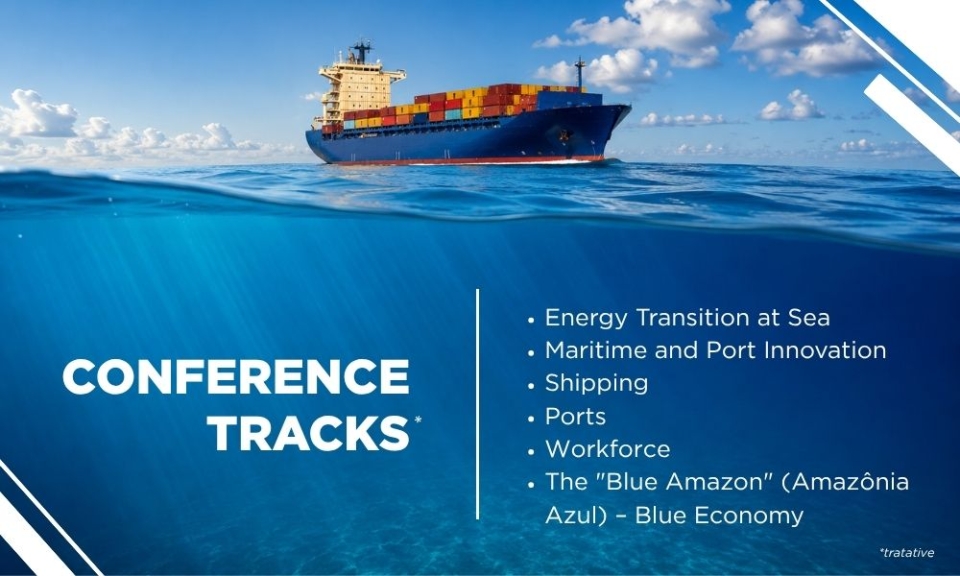
Energy Transition at Sea
Discussion on strategies, investments, and technologies for maritime and offshore decarbonization. It covers offshore wind, low-carbon fuels, electrification, infrastructure, and the regulatory and operational challenges of the ecosystem.
Maritime and Port Innovation
Debates on digital transformation, automation, and artificial intelligence applied to the sector. The focus is on operational efficiency, safety, connectivity, smart logistics, cybersecurity, and the development of innovative ecosystems.
Shipping
Analysis of trends, freight markets, and challenges in global maritime transport. It includes fleet renewal, shipping decarbonization, geopolitical risk management, and the impacts of regulatory and technological transformations on the sector.
Ports
Approach to modernization, infrastructure, and port management with a focus on logistics efficiency and multimodal integration. It includes attracting investment, concession models, digitalization, sustainability, and the role of economic sector development.
Workforce
The challenges arising from developments in political-strategic conflict situations and the introduction of disruptive technologies. Fostering the well-being and mental health of port workers and seafarers. Adaptation to confinement routines and prolonged periods away from shore. Soft skills, behavioral competencies, and team performance. Continuing education, skills development, and succession planning.
The "Blue Amazon" (Amazônia Azul) – Blue Economy
The implications of the international and domestic legal frameworks governing maritime spaces. Maritime and/or Port Clusters, industrial and economic development, environmental conservation, and marine biotechnology. Offshore Energy: the potential of offshore wind, ocean current, and wave energy. Defense and Security. Nautical and coastal tourism. Public policy and Marine Spatial Planning (MSP). Decommissioning and repurposing of vessels and offshore platforms.